Sub Organizations
Sub-organizations let you segregate test data across multiple business units within your TestMu AI account. You can also distribute the concurrency you have purchased among sub-organizations, so each operates independently with its own administrators, users, and settings.
This feature is available exclusively on the Enterprise plan. To enable it for your organization, please reach out to your account manager.
Things to Note
Before setting up sub-organizations, review the following constraints:
- Single membership: A user can belong to only one organization or sub-organization at a time. Cross-membership is not supported.
- Concurrency ceiling: You can allocate the concurrency you have subscribed to across sub-organizations. The total concurrency allocated across all sub-organizations cannot exceed the concurrency available at the root organization level, on a per-product basis.
Create Your Sub-Organization
Step 1: Sign in to your TestMu AI account. If you don't have an account, register for free.
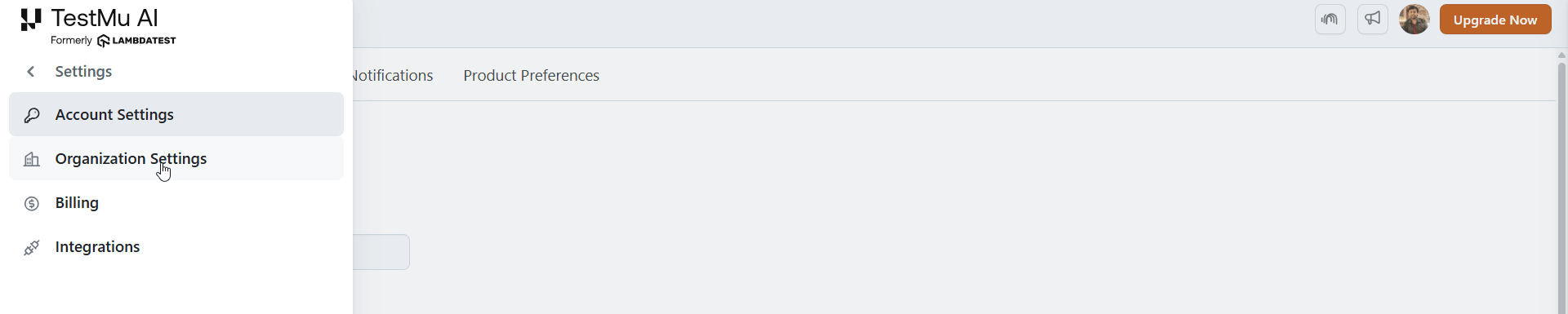
Step 2: From the dashboard, go to Settings and select Organization Settings.
Step 3: Open the Sub Organizations tab.
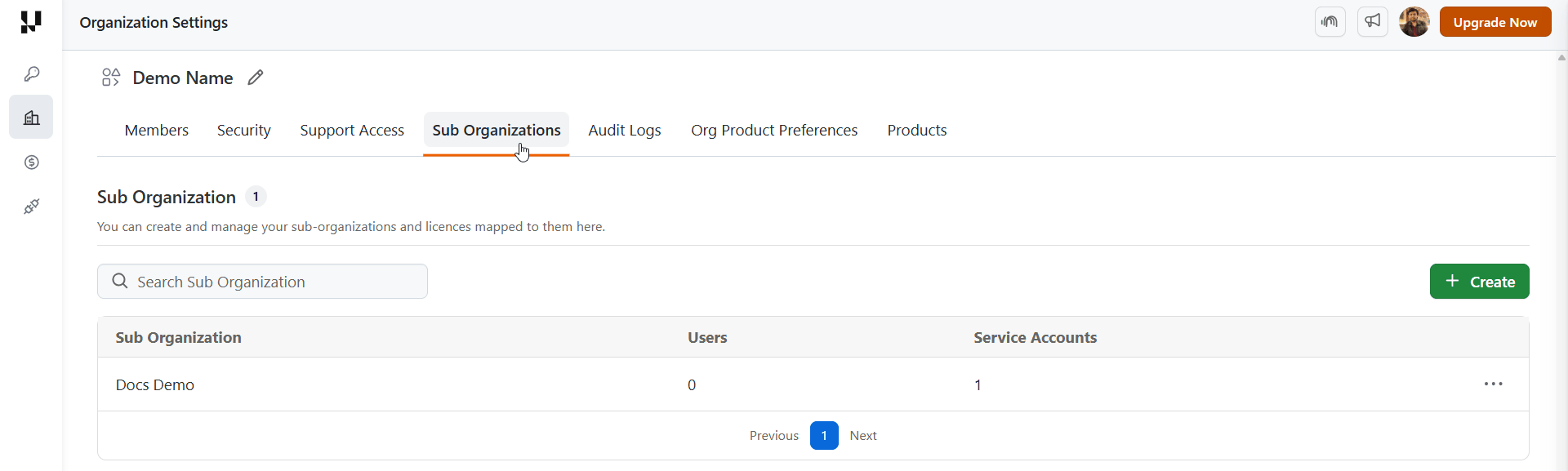
Step 4: Click Create in the top-right corner. Enter a name for your sub-organization.
Allocate concurrency to at least one product using the sliders. Each row shows the concurrency allocated against your organization's total, for example 0/50. You cannot create a sub-organization without allocating concurrency to at least one product.
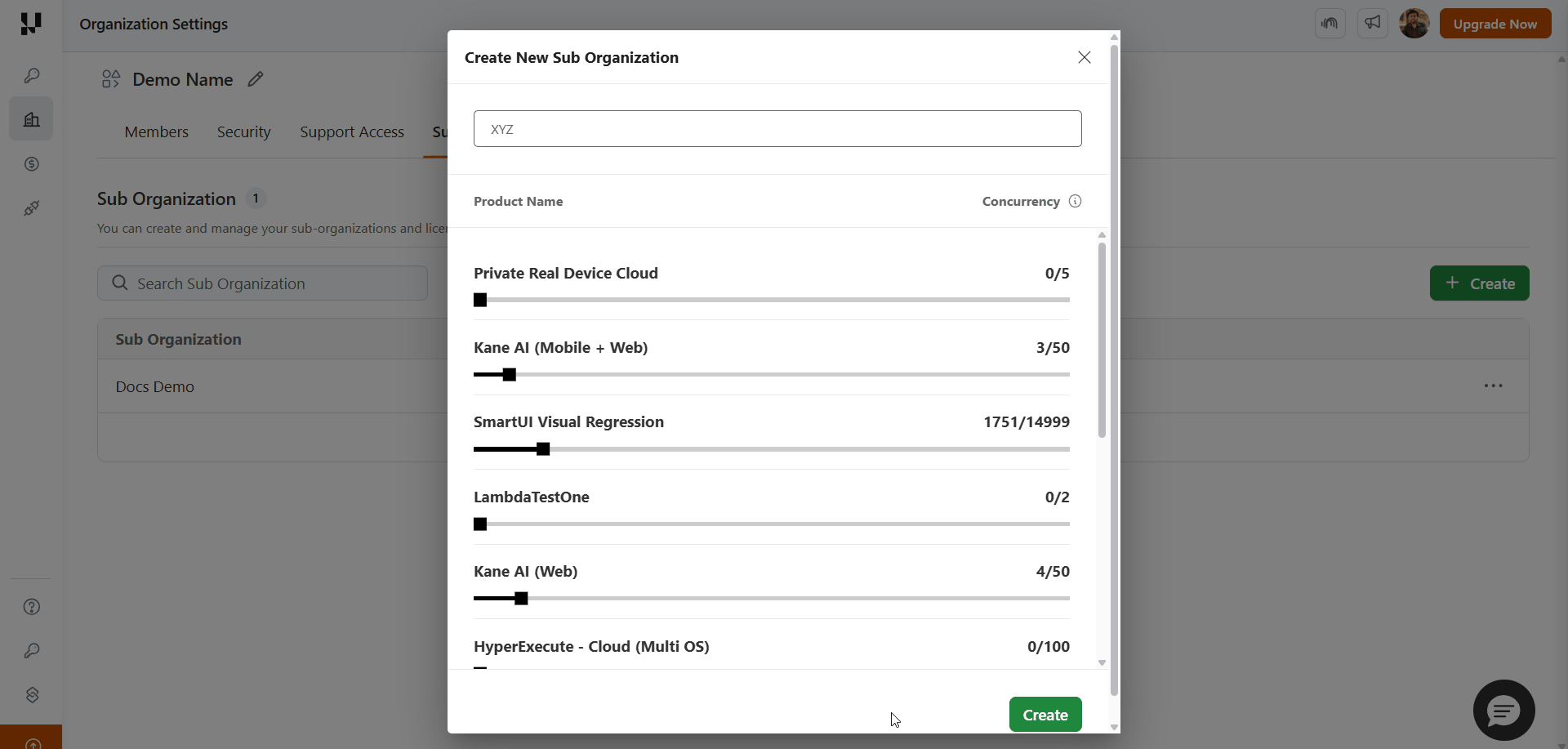
Step 5: Click Create.
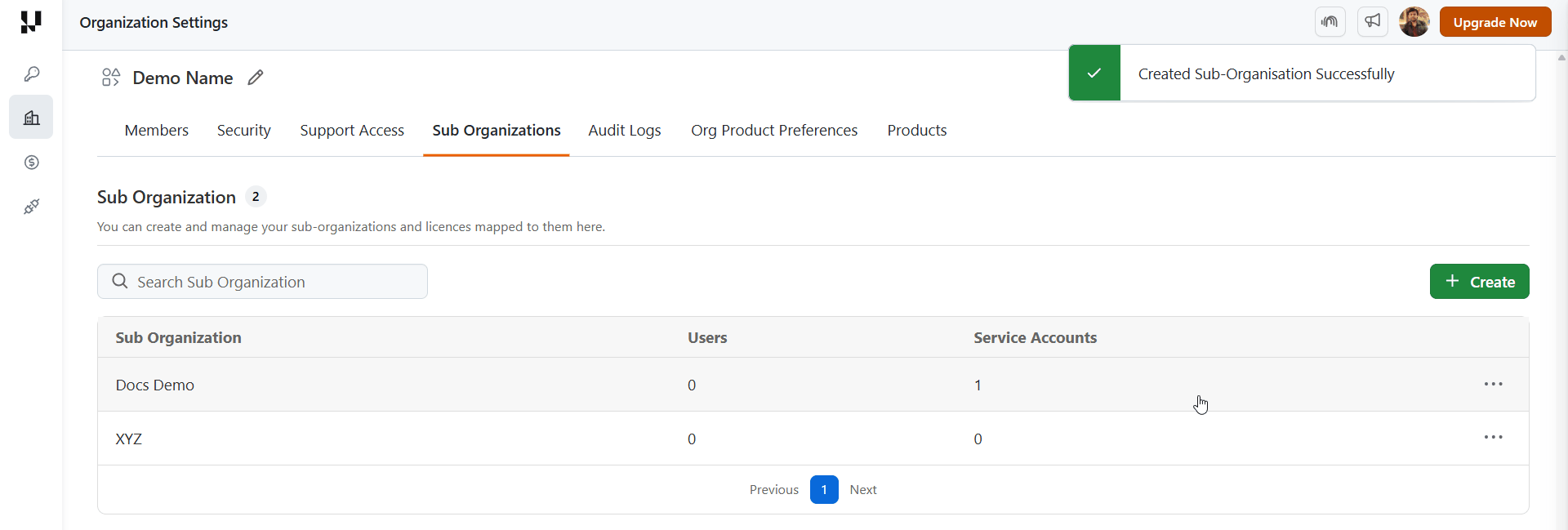
Your sub-organization appears in the list with its user and service account counts, and is ready to configure.
Manage Your Sub-Organization
The Sub Organizations list shows each sub-organization along with its user count and service account count.
To manage a sub-organization, click the three-dot (⋯) menu at the end of its row. From this menu, you can View, Edit, or Delete the sub-organization.
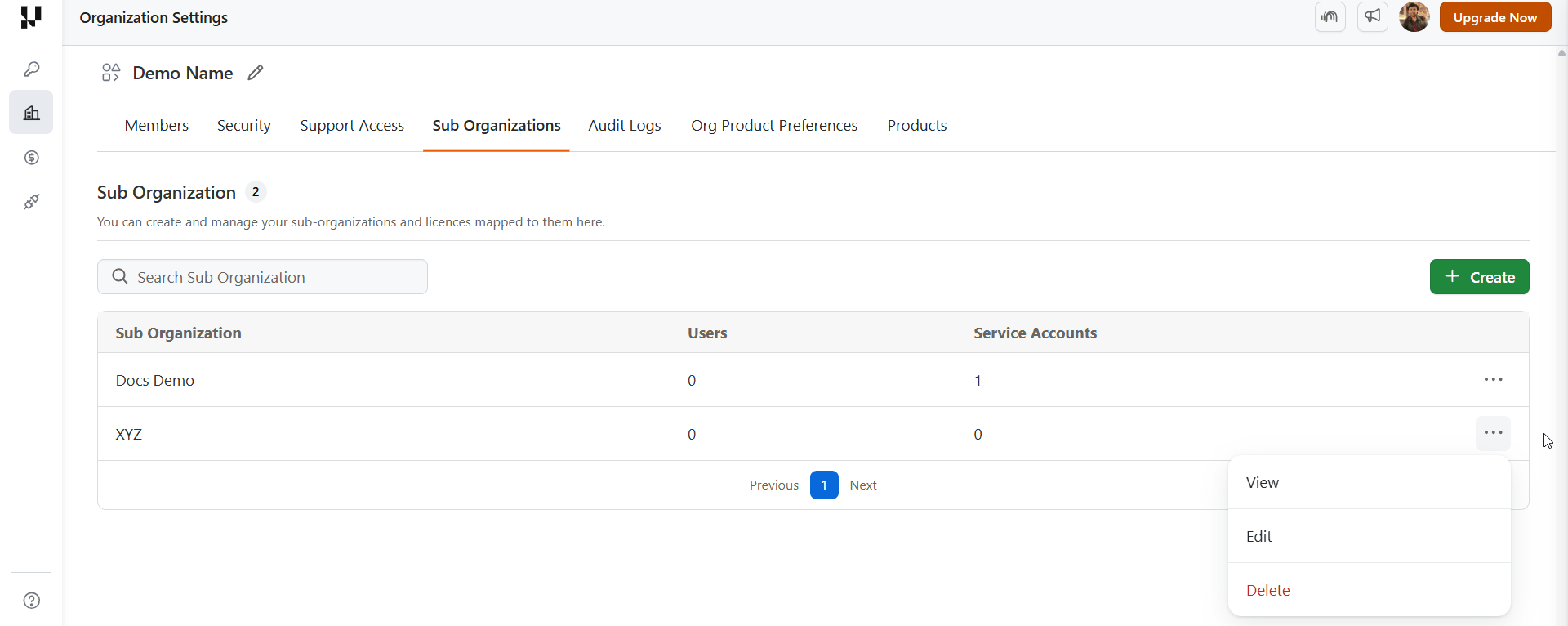
You can also rename a sub-organization from inside it, using the pencil icon next to its name.
Manage Users in Your Sub-Organization
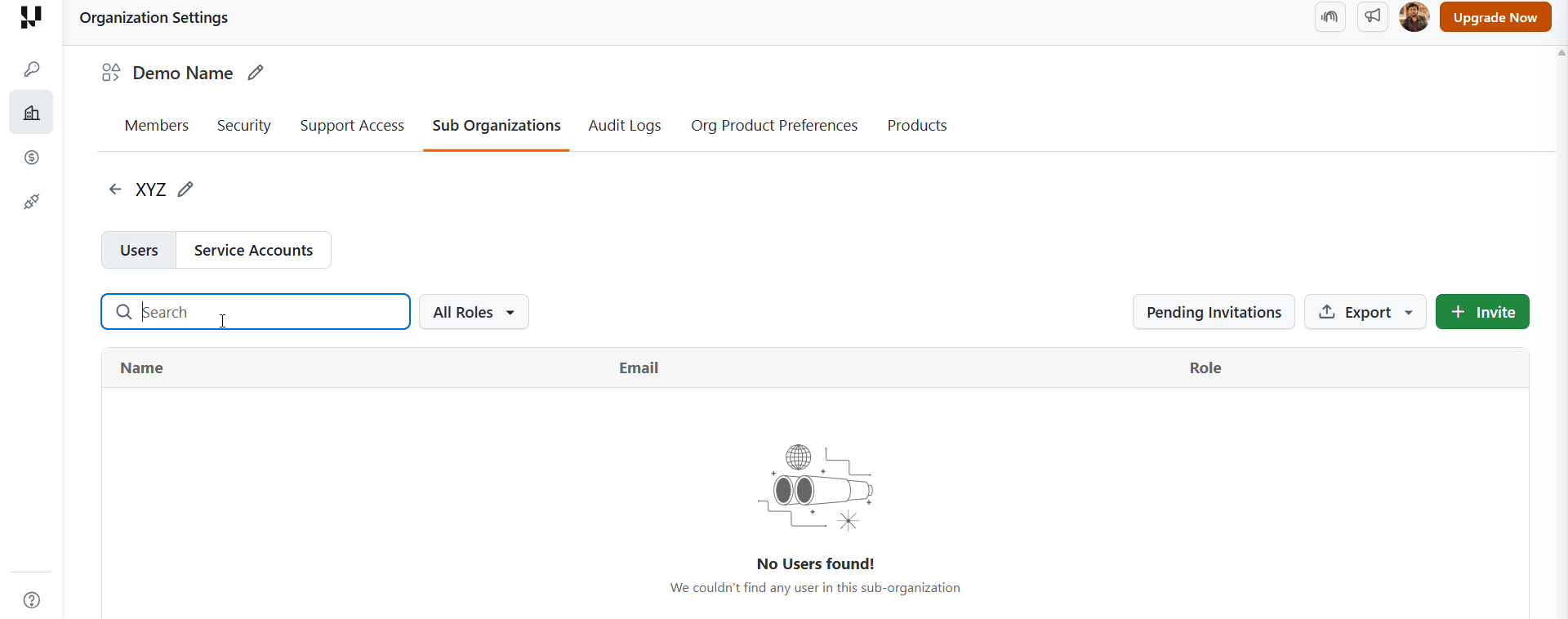
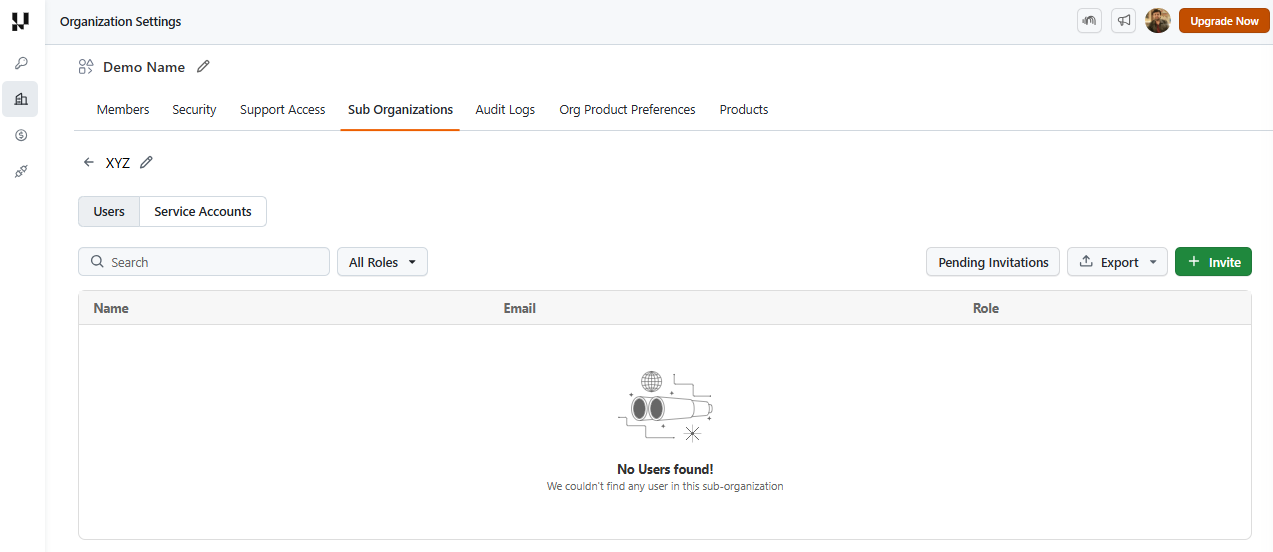
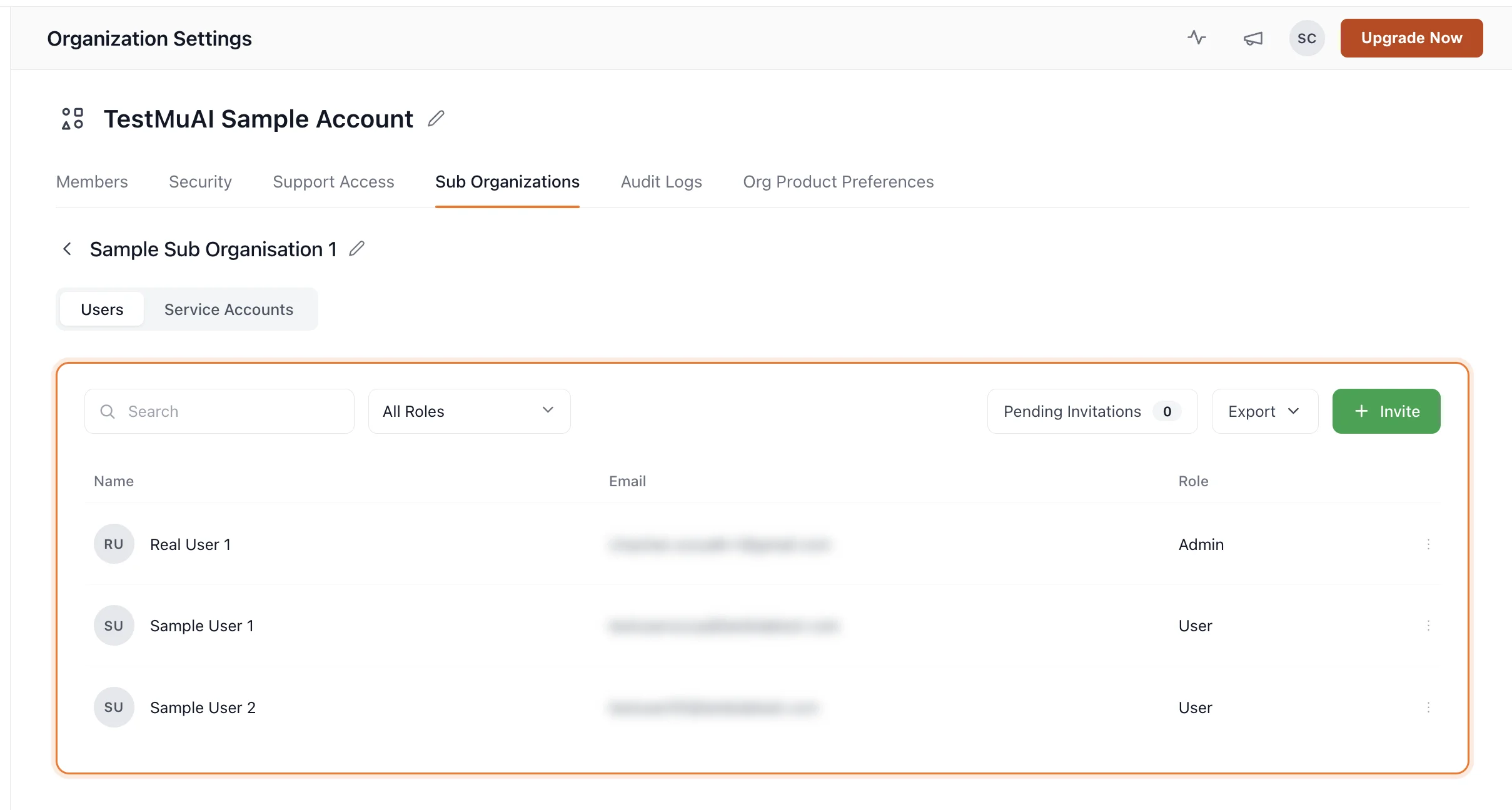
Open the sub-organization from the list to manage its users. The Users tab is selected by default and lets you search the user list, filter by role, review pending invitations, export the list, and invite new users.
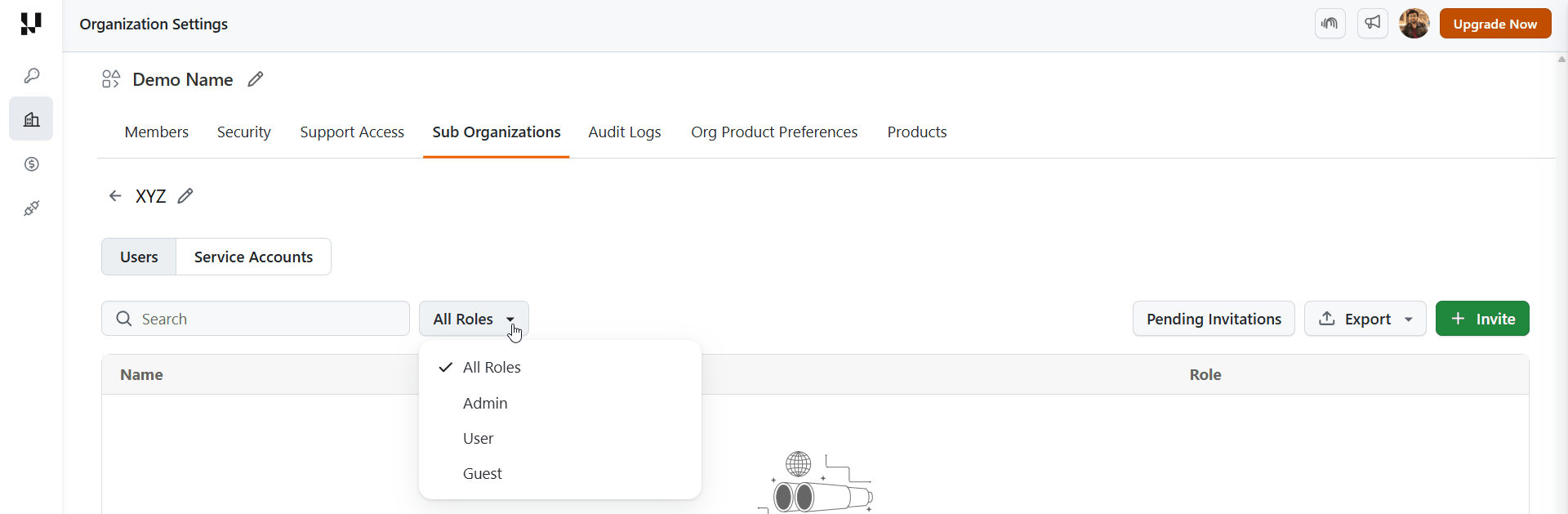
Use the All Roles dropdown to filter the list to only Admin, User, or Guest members.
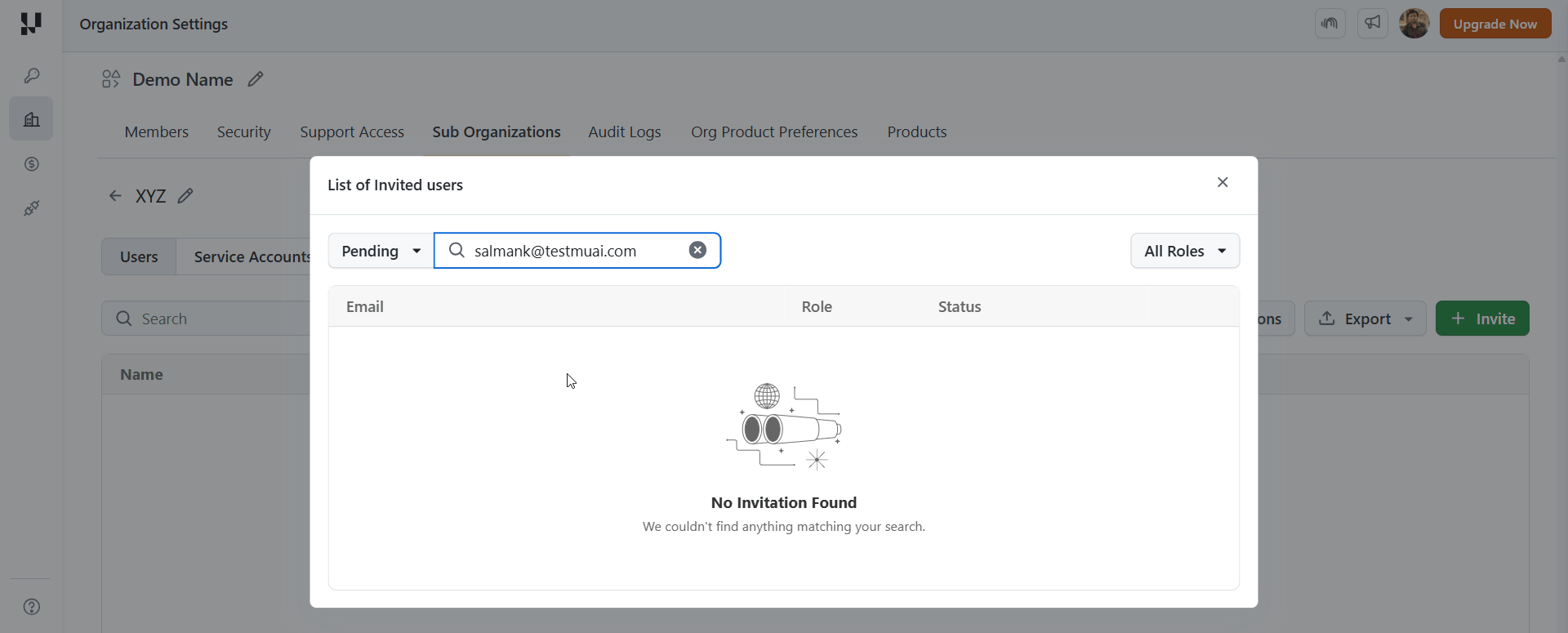
Click Pending Invitations to review invitations that have been sent but not yet accepted. You can search by email address and filter by status or role.
Invite a User
To invite users to your sub-organization, open the newly created sub-organization from the list.
Step 1: Click Invite.
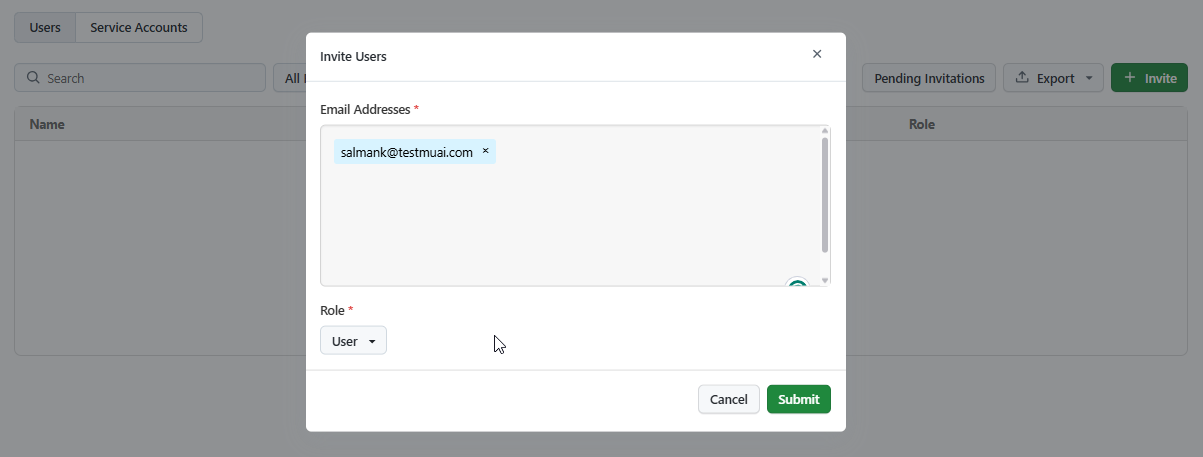
Step 2: Enter the email address of the user you want to add, select a role from the dropdown, and click Submit.
Manage Existing Users
After users have joined, you can manage them directly from the Users tab inside the sub-organization.
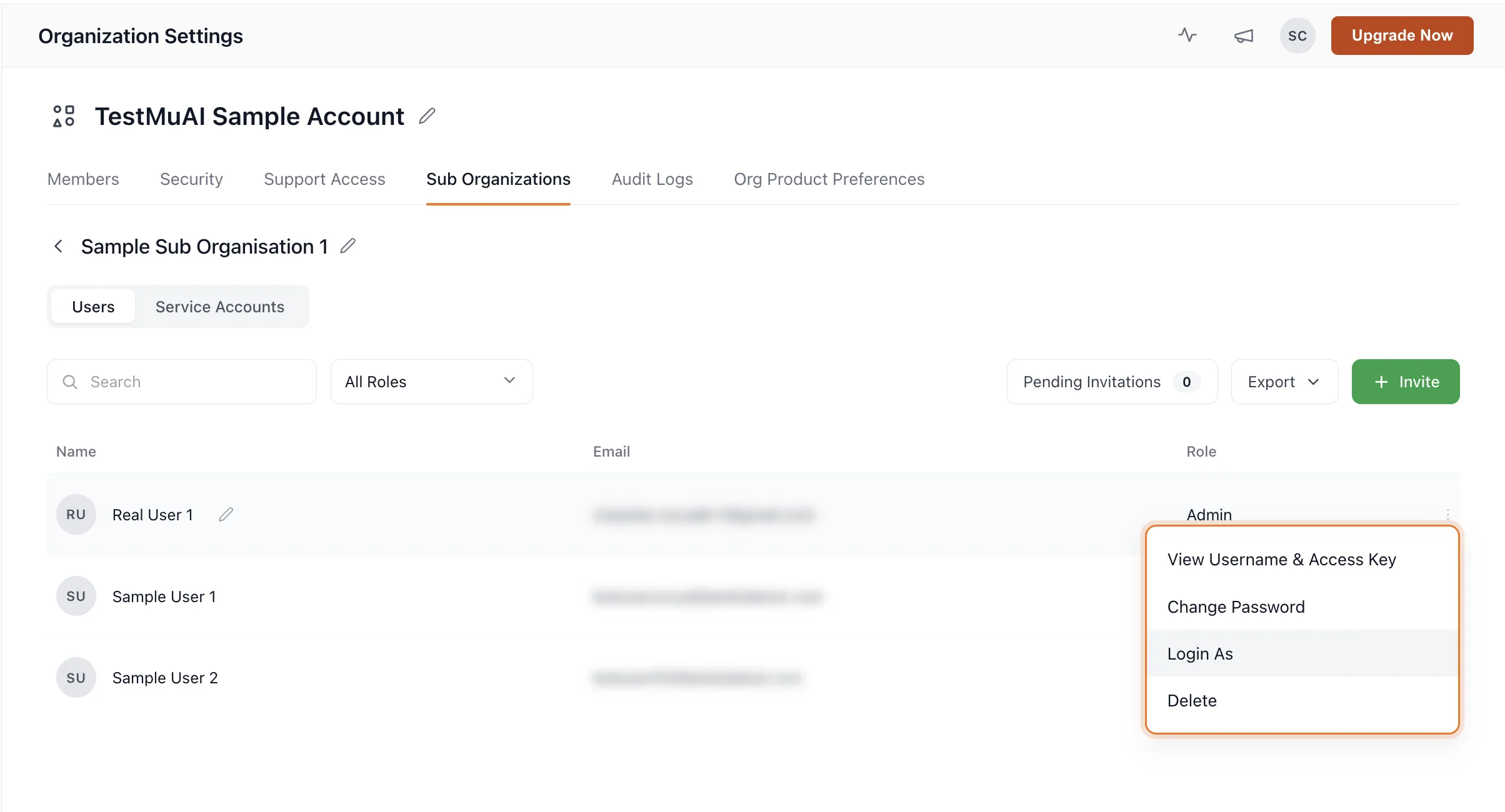
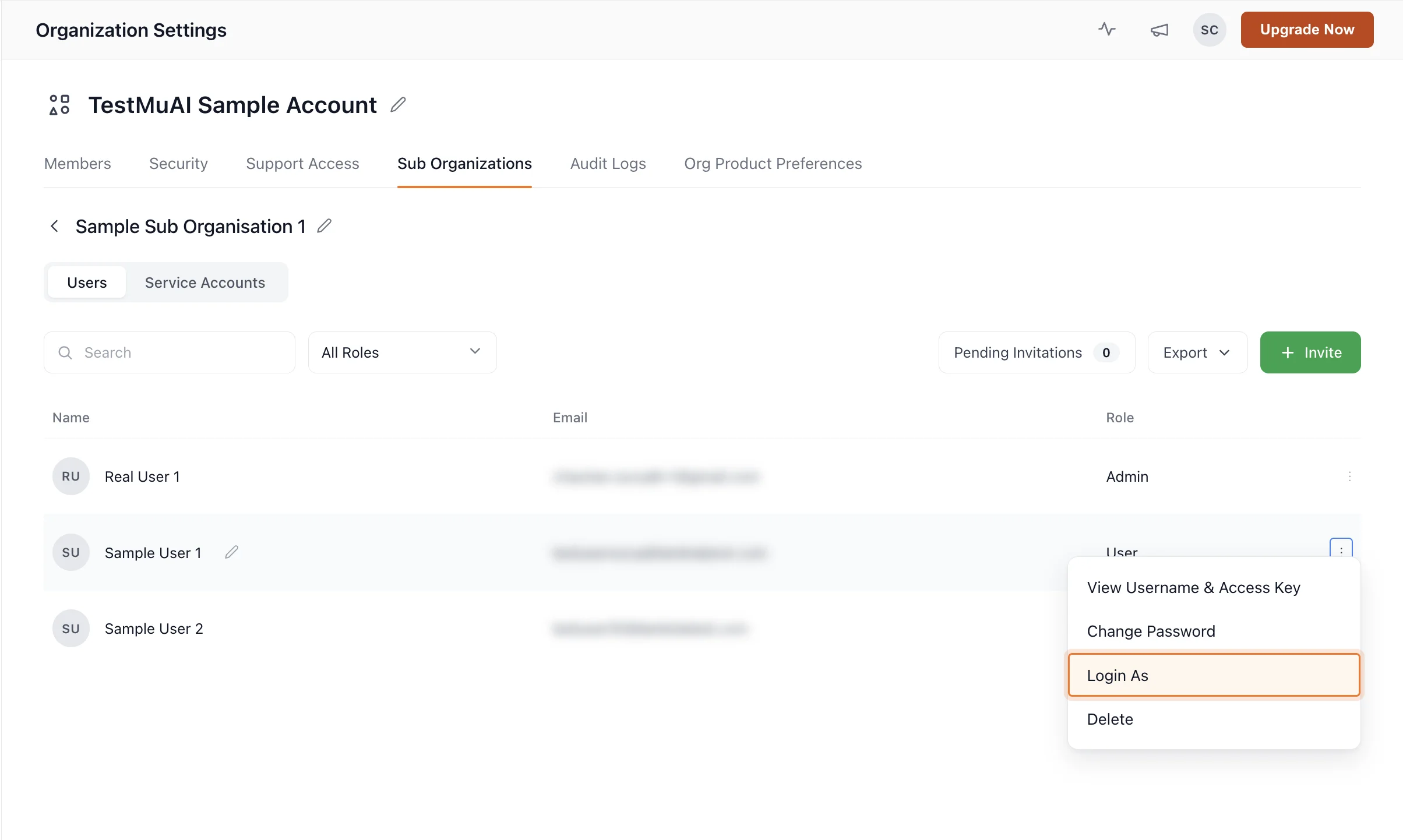
Each user row has a three-dot (⋯) menu that provides the following actions:
- View Username & Access Key: View the user's username and access key for use in automation or scripts.
- Change Password: Reset the password for the selected user.
- Login As: Sign in to TestMu AI as the selected user (see Login As below).
- Delete: Remove the user from the sub-organization.
Login As
The Login As action lets administrators sign in to TestMu AI as another user within the sub-organization. This is useful for troubleshooting access issues, validating role-based permissions, or reproducing problems reported by a team member.
Step 1: Open the three-dot (⋯) menu next to the user and select Login As.
Step 2: You are now signed in as the selected user and will see TestMu AI exactly as they do. An Assumed Identity indicator appears in the top-right corner showing whose account you are using.
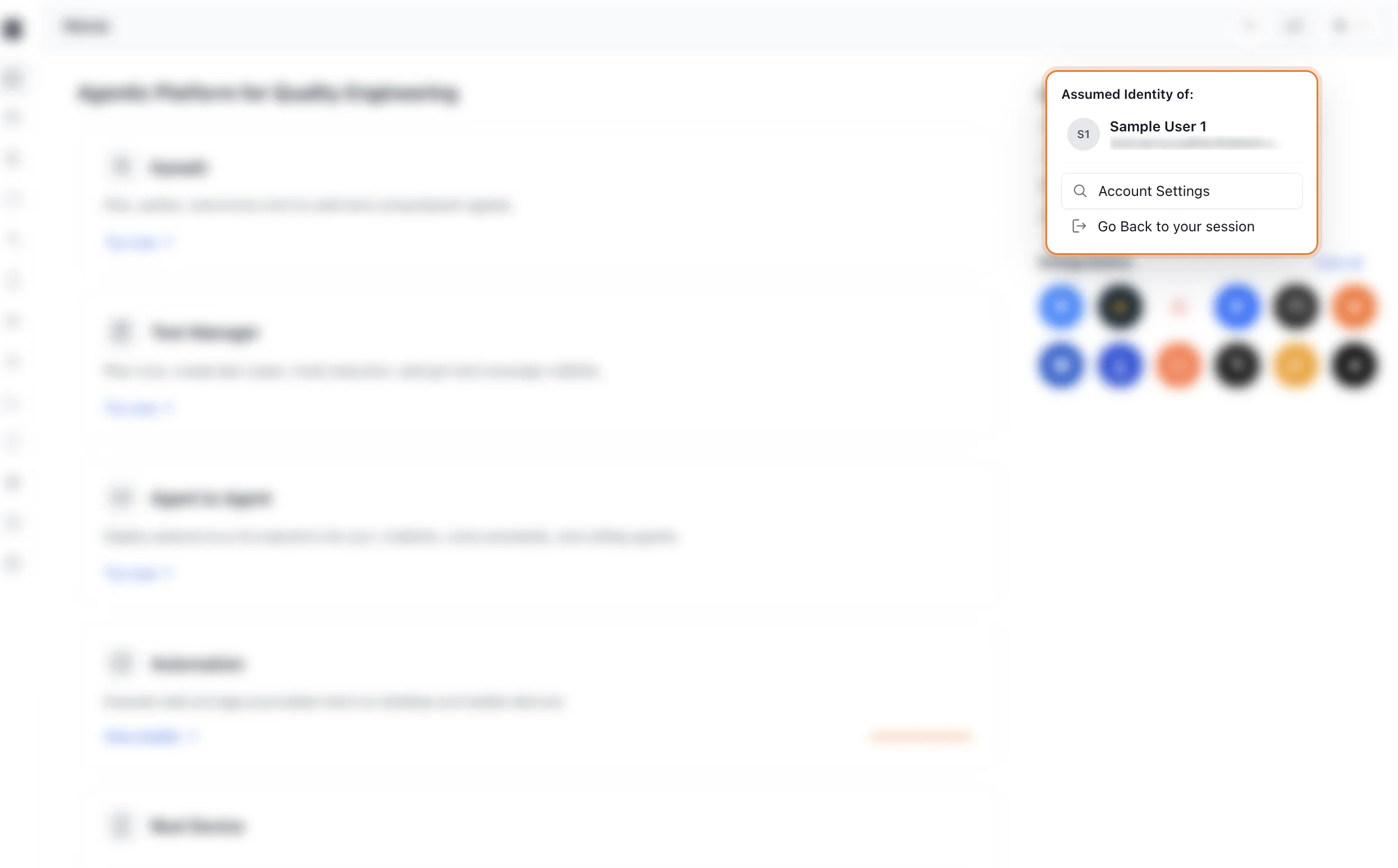
Step 3: To return to your own account, click the Assumed Identity indicator and select Go Back to your session.
Use the Login As action responsibly. Any changes you make while impersonating another user are recorded against that user's account.
Manage Service Accounts
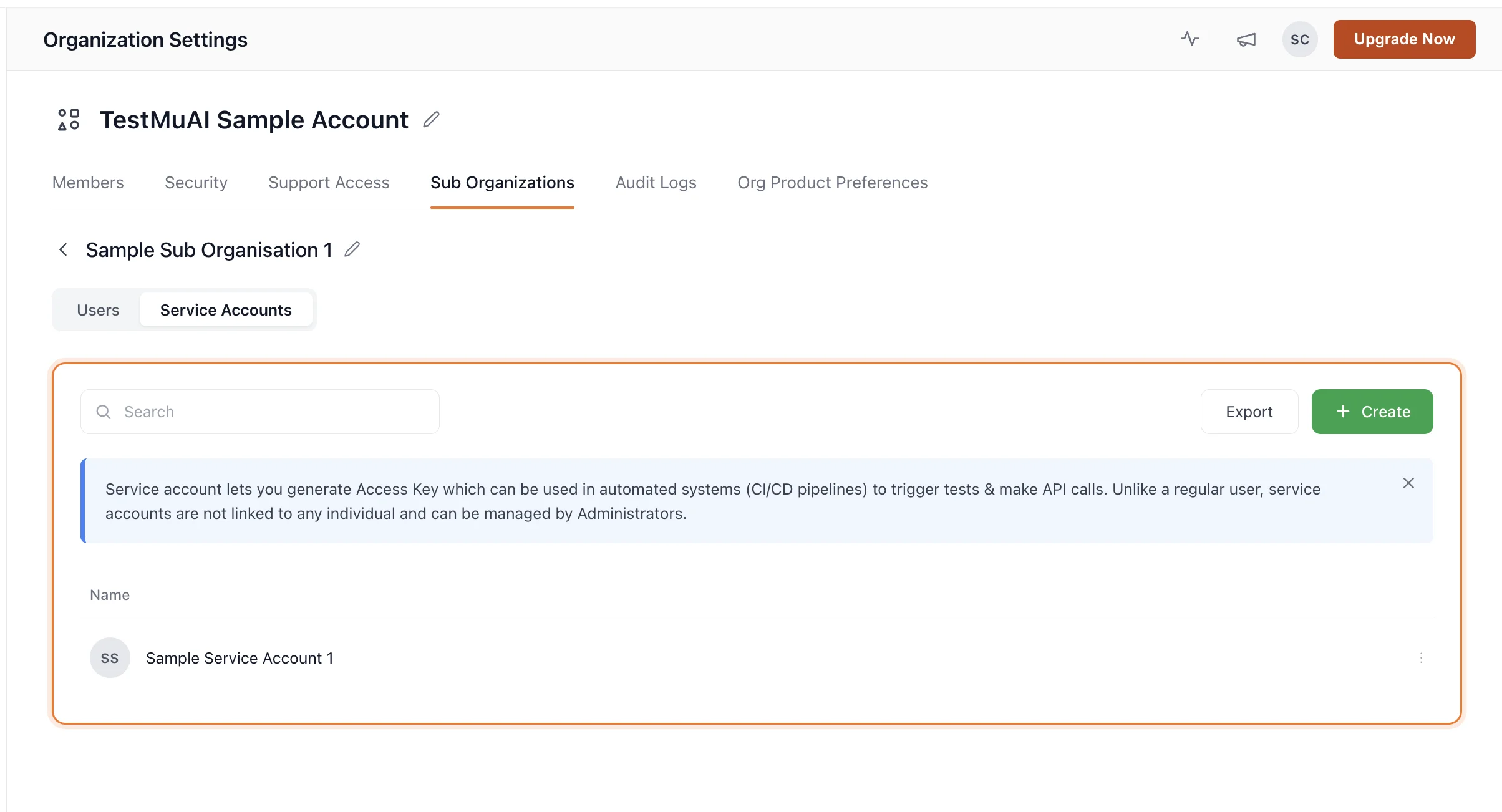
A service account lets you generate an access key that can be used in automated systems (such as CI/CD pipelines) to trigger tests and make API calls. Unlike a regular user, a service account is not linked to any individual and can be managed by administrators.
Create a Service Account
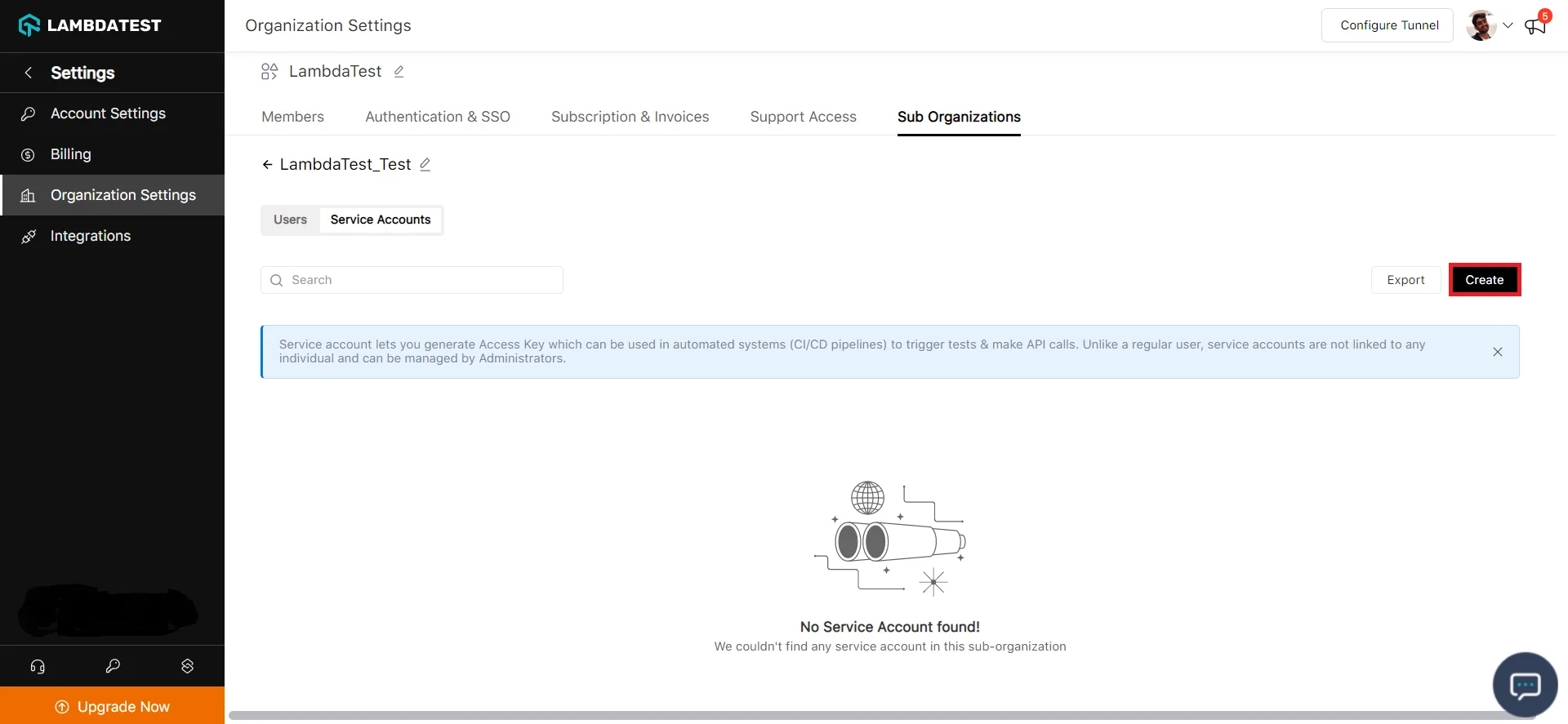
To create a new service account, open the Service Account tab within your sub-organization.
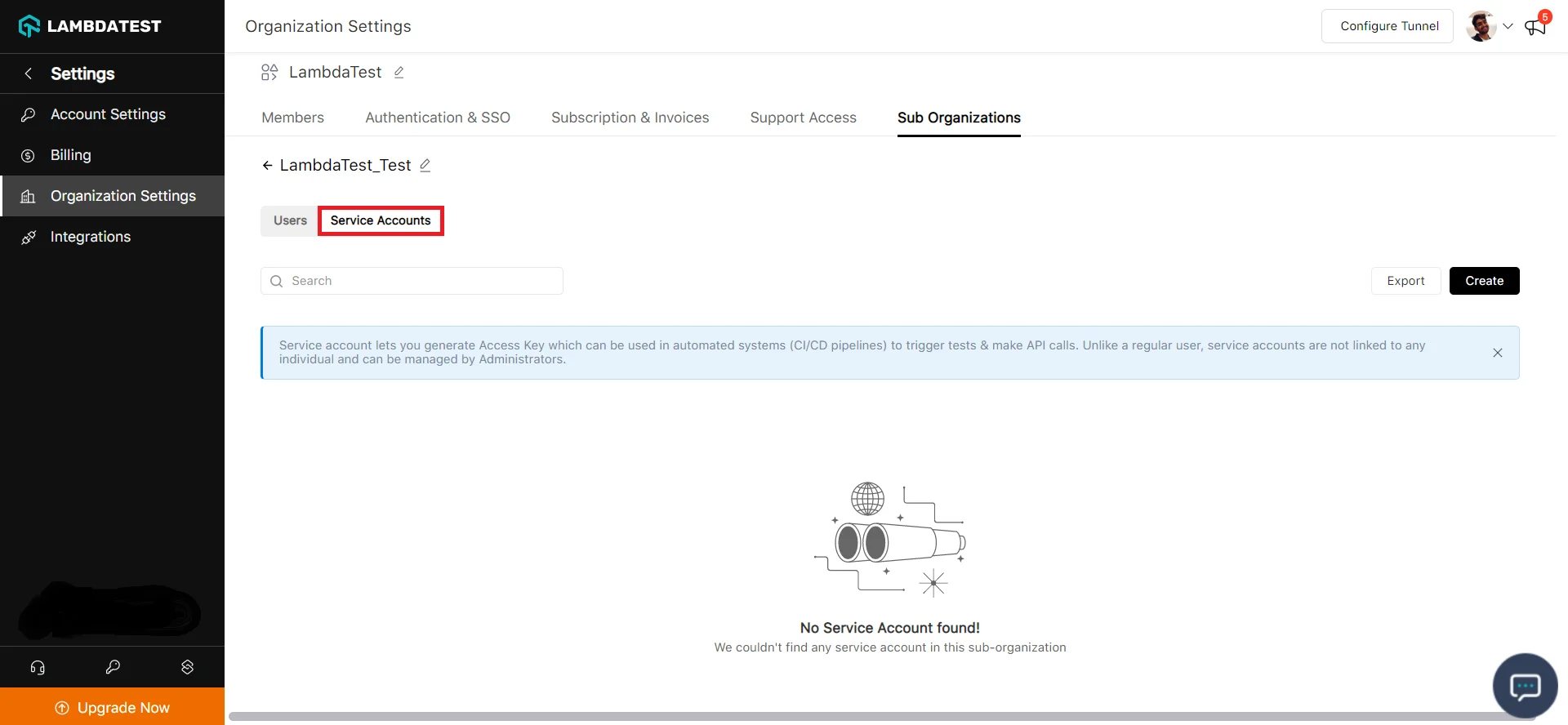
Step 1: Click Create.
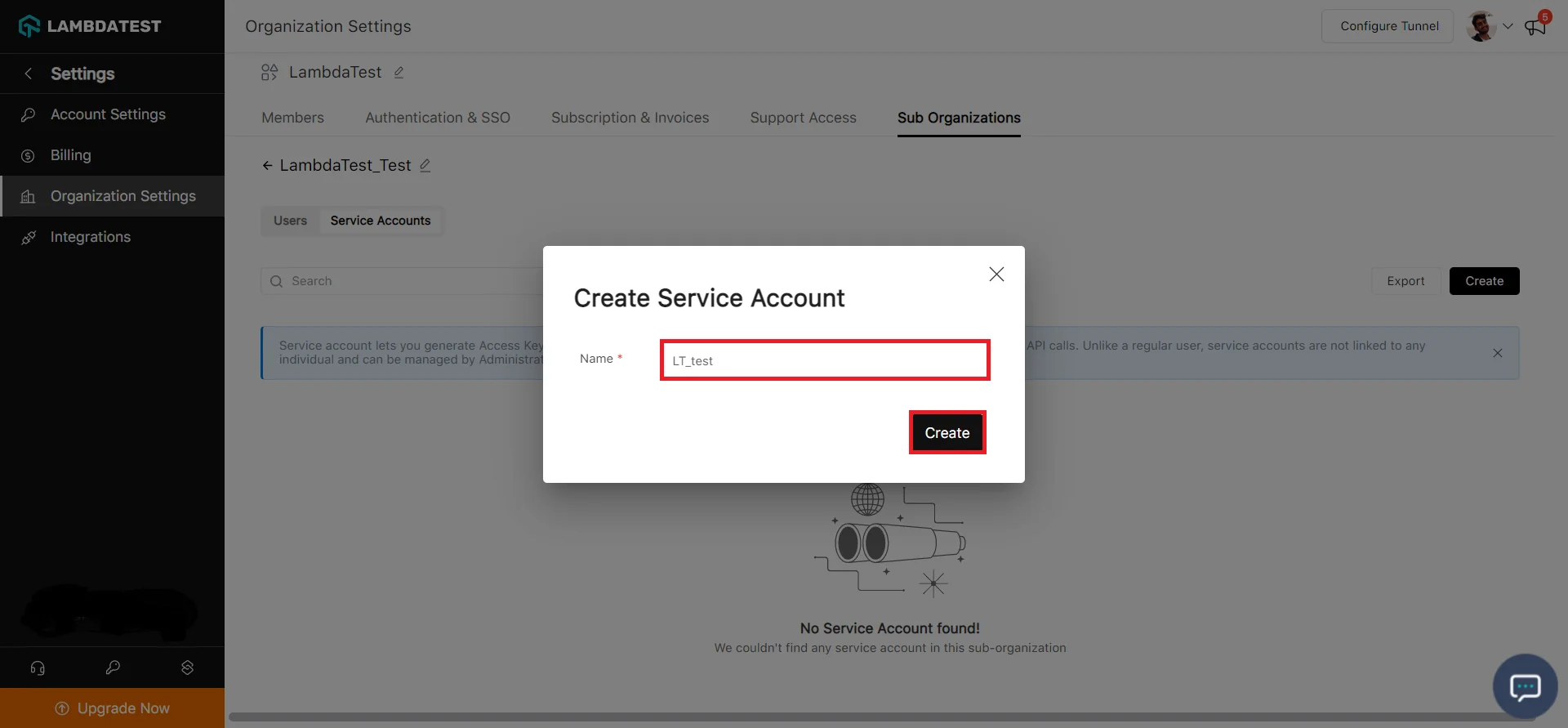
Step 2: Enter a name for your Service Account and click Create.
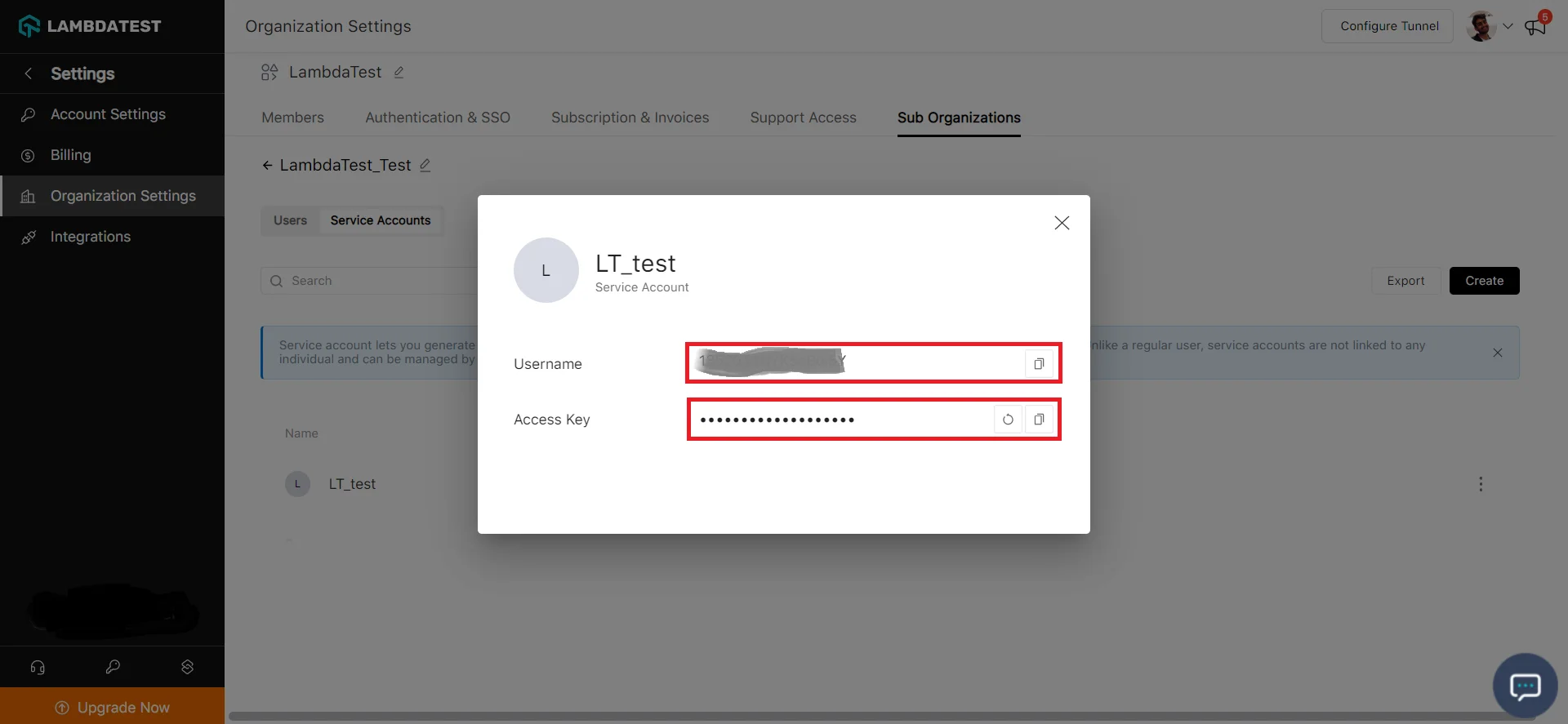
Step 3: Your Service Account credentials are displayed. Save them securely, as they will not be shown again.
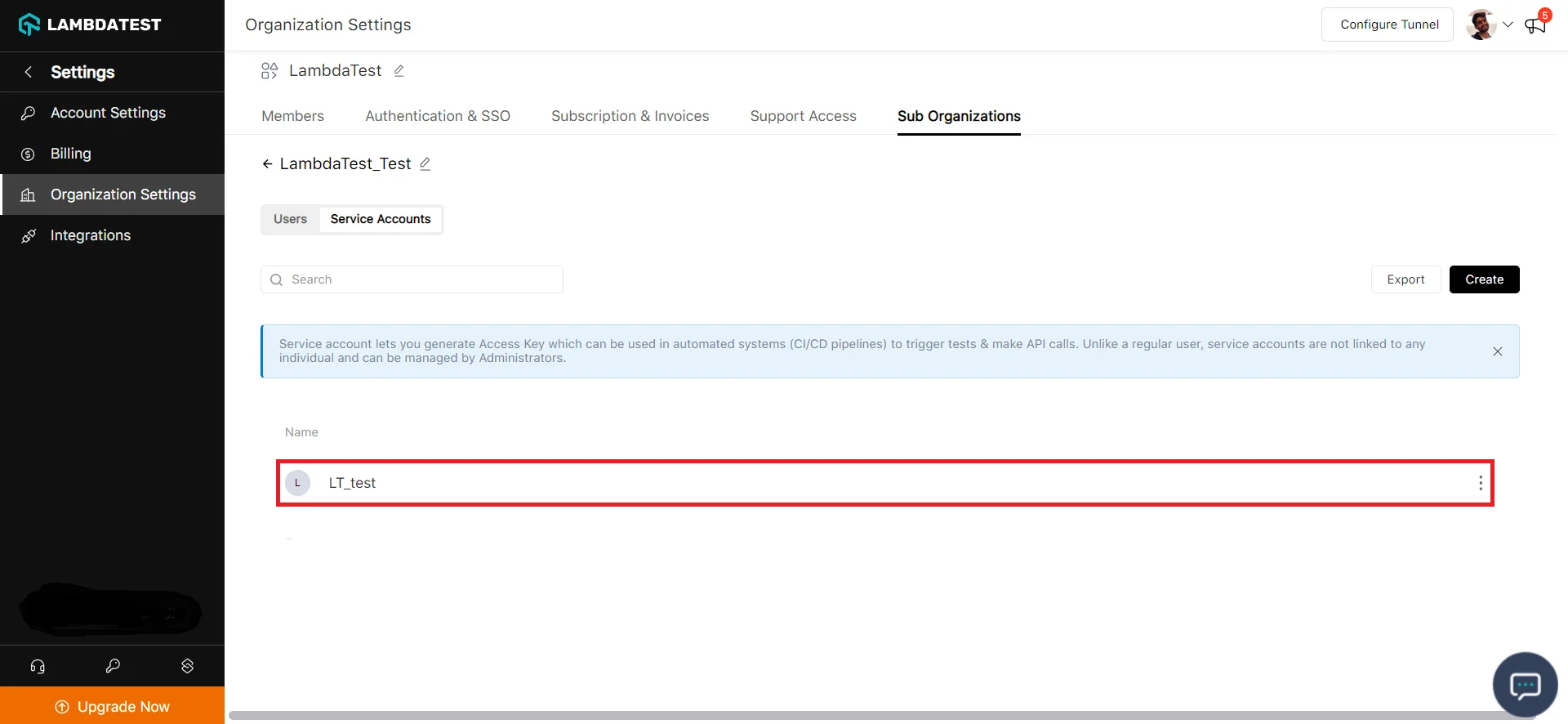
Your new Service Account is now ready to use.
That covers everything you need to know about the sub-organizations feature. If you have any questions, please reach out via our 24/7 chat support or email us at support@testmuai.com.

 Chat with Us