 Test your AI Agents with the all-new Agent to Agent Testing Platform.Learn More
#1 AI-Native API Testing Solutions
Drive efficiency and reliability with our advanced API testing solutions, ensuring seamless integration, optimal performance, and strong security for your enterprise applications.

Trusted by 2M+ users globally






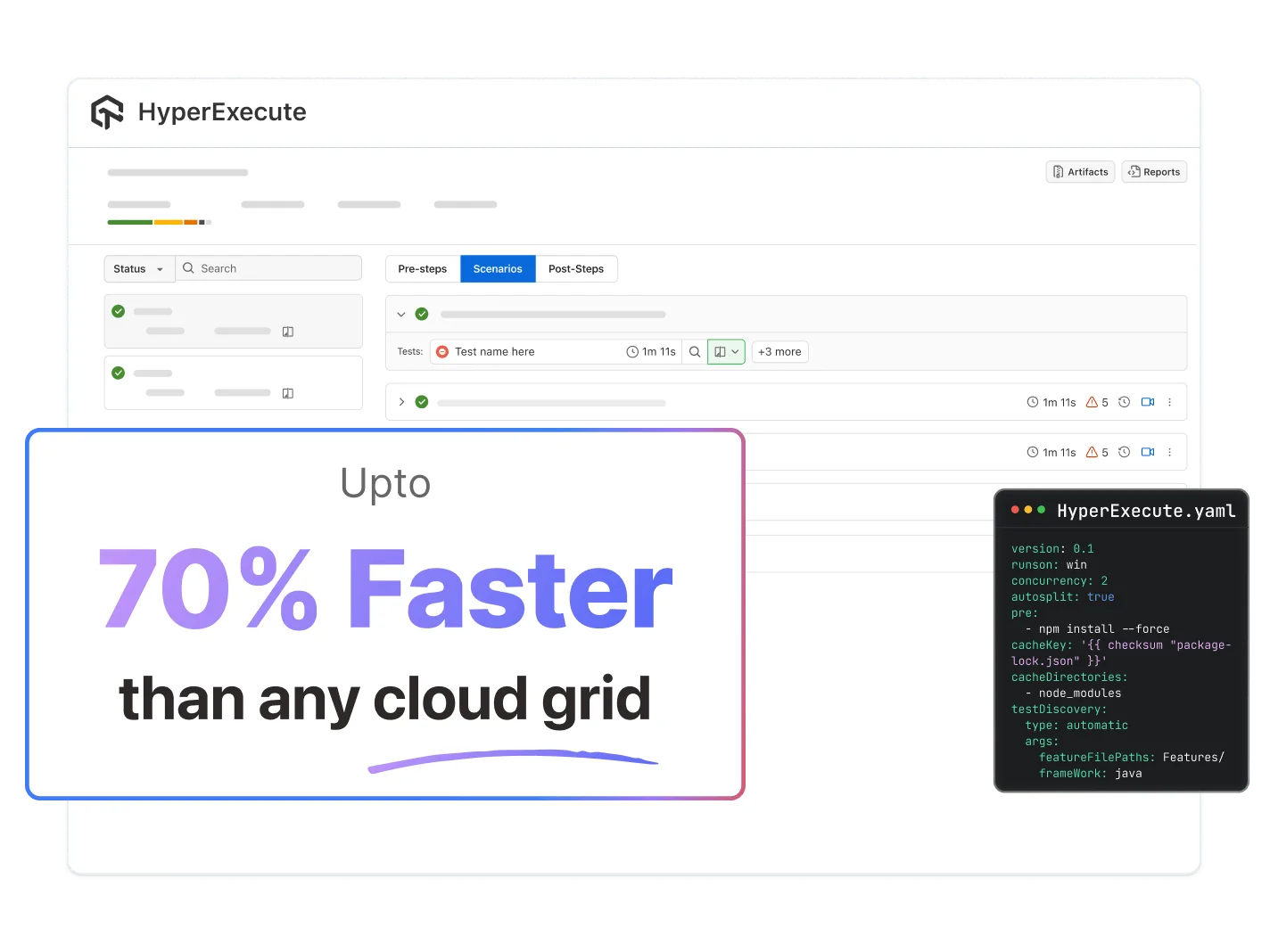
API Testing with HyperExecute
- Scale API tests instantly with cloud orchestration.
- Automate test suite discovery and parallelize endpoint execution.
- Integrate seamlessly into CI/CD for full visibility.

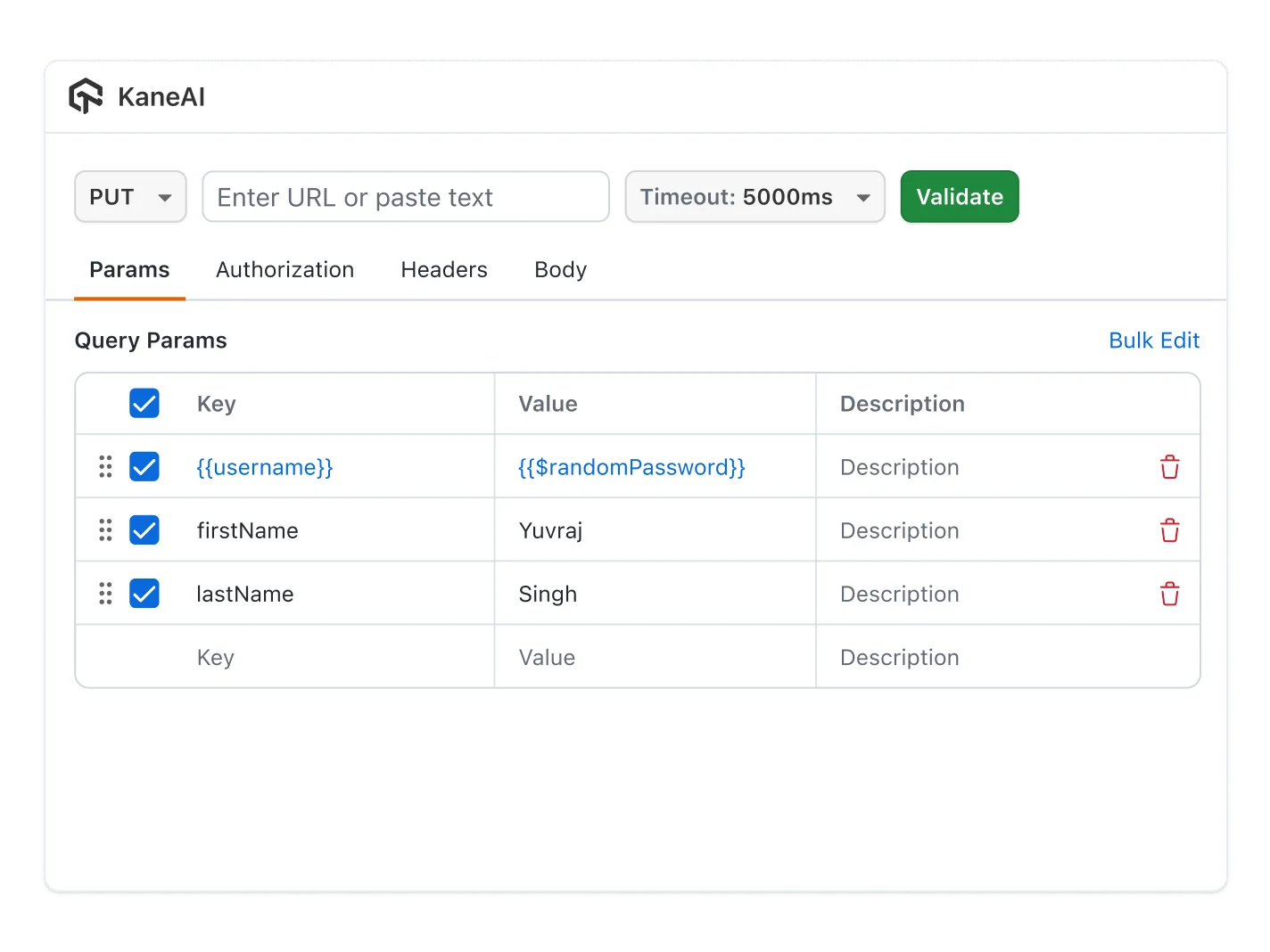
API Testing with KaneAI
- Generate API tests from cURL commands or natural language prompts.
- Batch test multiple endpoints and validate responses automatically.
- Use GenAI to auto-heal test failures and adapt to schema changes.
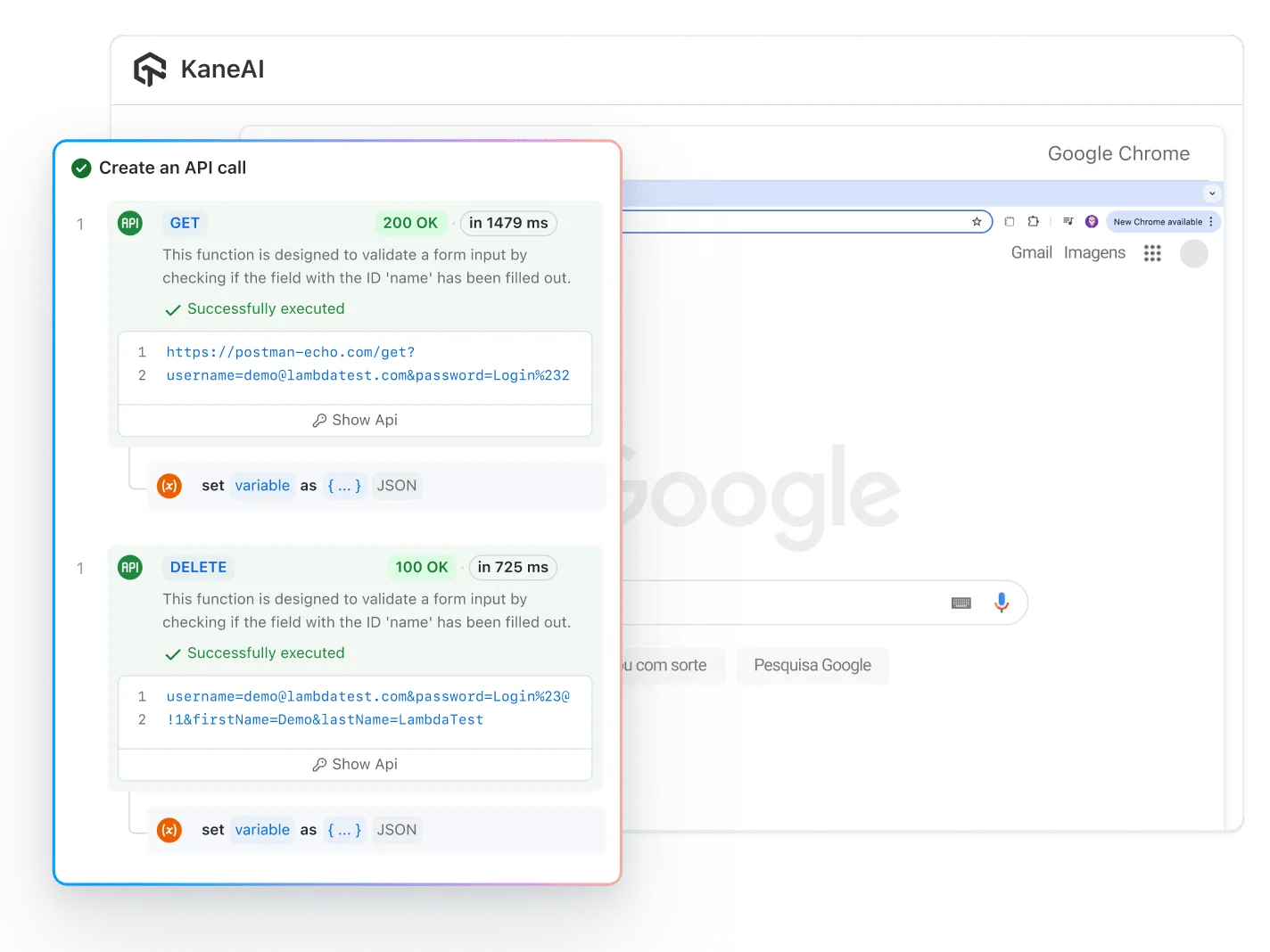
Execution & Performance Insights with KaneAI
- Run all API tests in parallel for instant performance insights.
- View detailed execution data: HTTP methods, response codes, and timings.
- Quickly identify issues with response data for faster debugging.

Customer Success Is Our Success


How LambdaTest helps Dunelm to achieve Digital Transformation in Testing
Stuart Day
Head of Quality


Dashlane reduced Test Execution Time by 50% with HyperExecute
HyperExecute is a highly reliable test execution platform and has excellent customer support.
Sagar Uday Kumar
Sr. Engineering Manager


LERETA improved the speed of test execution upto 70% with HyperExecute
You can just click a button and run your test and it is an efficient way to manage your test environments.
Todd Lemmonds
VP Quality Assurance

How LambdaTest helps Dunelm to achieve Digital Transformation in Testing
Stuart Day
Head of Quality
Dashlane reduced Test Execution Time by 50% with HyperExecute
HyperExecute is a highly reliable test execution platform and has excellent customer support.
Sagar Uday Kumar
Sr. Engineering Manager
More Reasons to Love LambdaTest
Documentation
Step-by-step documentation for various test automation frameworks to help you run your first Selenium script.
View Docs
Enterprise-Grade Security, Privacy, AI Governance & ESG
We protect your data and AI systems with global security, privacy, responsible AI, and ESG standards, backed by certifications, ESG attestation, and continuous monitoring, guided by Responsible AI Principles.

Wall of Fame
LambdaTest is #1 choice for SMBs and Enterprises across the globe.

Industry Recognition

24/7 support
Got questions? Throw them to our 24/7 in-app customer chat support or email us on support@lambdatest.com.


Trusted by over 2,000,000 teams
1.2B+
Tests
2M+
Users
10K+
Enterprises
132
Countries


Start your journey with LambdaTest
Get 100 minutes of automation test minutes FREE!!