 Test your AI Agents with the all-new Agent to Agent Testing Platform.Learn More
How a Regional Health System Cut EHR Integration Testing from 9 Days to 2 Days While Eliminating 91% of Patient Portal Defects
78%
Reduction in Testing Time
91%
Fewer Patient Portal Defects
60%
Decrease in Manual Test Effort
"We had five days between finishing one test cycle and starting the next. Epic and Oracle Health both ship updates every two weeks. We were falling behind, and patients were finding bugs before we did."
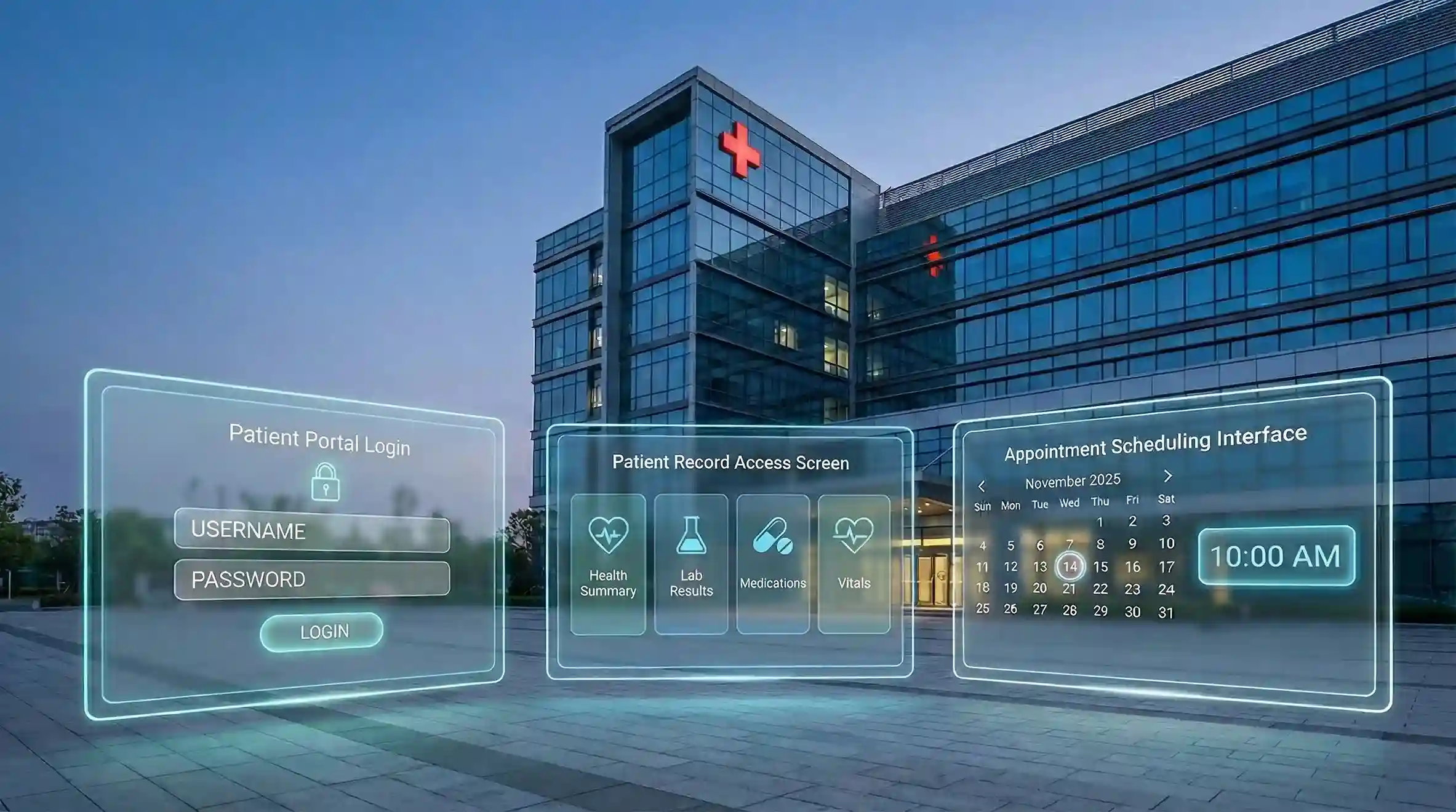
About the Company
A regional health system runs three hospitals and 12 ambulatory clinics serving 275,000 patients annually. Like many health systems, they operate a mixed EHR environment: Epic handles inpatient workflows, Oracle Health manages ambulatory care, and their custom patient portal connects both systems to give patients a unified digital experience.
As the organization expanded its digital ecosystem, existing testing processes couldn’t keep pace with frequent EHR updates and diverse patient devices. The growing gap between development and clinical validation made a modern, scalable testing approach essential.
Three Major Challenges That Made the Provider Look for a Solution
The QA team faced three problems that were reaching a breaking point.
- Testing consumed 9 days of their 14-day release window: 3 days for Epic integration, 3 days for Oracle Health integration, and 3 days for patient portal testing. With only 5 days of buffer, they couldn't properly validate fixes before the next vendor update cycle started.
- Limited Device Testing Infrastructure: They tested only on about 20 devices while patients accessed the portal from 150+ device-browser combinations. This gap became visible when an Epic API change truncated allergy data on some of the Android phones.
- Only QA staff could write tests: Eight clinical informaticists who understood workflows deeply had to wait days or weeks for QA to validate their features, creating a bottleneck between development and clinical validation.
Running Tests for Epic, Oracle Health, and Portal in Parallel
The testing timeline problem required rethinking the test execution architecture. Sequential testing was the bottleneck as each step waited for the previous step to complete.
LambdaTest's HyperExecute changed the equation by running tests in parallel across multiple environments simultaneously. Here's what that meant in practice:
Instead of Day 1-3 for Epic integration, Day 4-6 for Oracle Health integration, and Day 7-9 for patient portal testing, the team ran all three test suites simultaneously across 10,000+ device configurations.
The same comprehensive test coverage was completed in less than 2 days instead of the 9 days it required previously.
With a 2-day test cycle, they could now test every release candidate instead of only the final build. When developers pushed a fix for an Epic FHIR API issue, QA verified it across all affected workflows in 20 minutes.

"The first time we ran HyperExecute, we sat there watching all three test suites execute simultaneously. Epic integration, Oracle Health workflows, and patient portal tests, all happening at once. The 48-hour test cycle gave us breathing room we'd never had."
— Senior QA Engineer
Testing on the Exact Phones and Tablets Patients Actually Use
To cover all devices, the company required access to all the phone and tablet versions patients used. Emulators and simulators weren't sufficient because the issues only appeared on real hardware with real browsers.
LambdaTest's Real Device Cloud gave them access to 10,000+ real devices. The QA team built a targeted test matrix based on their analytics data: the top 100 device-browser combinations representing 78% of patient traffic, all devices in the top 100 by enrollment starts, and specific configurations that had caused previous issues.
The results were immediate. Lab results that looked perfect on iPhone appeared truncated on certain Android devices with smaller screens. Medication names are displayed correctly on Android 13 but wrapped awkwardly on Android 11. Appointment confirmation dialogs rendered off-screen on specific tablet resolutions.
They caught these issues in testing instead of production. The team could reproduce bugs on the exact device where patients encountered them, show developers the specific rendering problem, and verify fixes on that same device before release.
With this integration, the mobile-specific bug detection rate went from 20% (mostly caught by patients) to 100% (caught in testing). Patient portal defects in production dropped 91%.
We had a Galaxy S21 in our lab, but the bug only appeared on the S21 Ultra with Android 12. We couldn't reproduce it until we tested on the exact device. With LambdaTest, we pulled up that specific configuration in minutes. No more guessing which hardware combination triggered the issue.
— Senior QA Engineer
Clinical Staff Writing Tests in Plain English Without Coding
Originally, clinical informaticists needed to explain what to test and send the requirements to a QA who’d then write the scripts.
LambdaTest's KaneAI introduced a fundamentally different approach: describe the test in plain English, and AI generates the automation code and runs the test on the same platform.
With this setup, the QA team could now become technical consultants (here's how to structure complex test scenarios) to the rest of the team, who were also involved in the testing. They focused on sophisticated integration testing while clinical staff validated their own domain-specific workflows.
Six Months Later, They Went From Crisis Mode to Strategic Testing
- Testing time per release cycle dropped from 9 days to 2 days.
- Test creation velocity increased 3x. Time from "feature complete" to "clinically validated" dropped from weeks to days.
- The patient portal app store rating improved from 3.2 to 4.6 stars.
- Support tickets for "portal not working" decreased 67%.
- The time to release new patient-facing features was cut in half.
Most importantly, testing went from reactive to proactive. Instead of catching issues in staging, they validated every code change before it left development. When the next Epic or Oracle Health update arrived, they were ready.
"We used to spend Fridays scrambling to finish test runs before the Monday release deadline. Now we finish testing by Wednesday and spend Thursday on exploratory testing and edge cases. That shift from reactive to proactive changed everything about how we work."
— Senior QA Engineer
Testing Becomes the Innovation Enabler
Testing no longer constrains what the health system can build. They release patient portal updates weekly, test new Epic and Oracle Health features independently of vendor timelines, and empower clinical staff to validate workflows without bottlenecks.
The platform is expanding beyond functional testing into visual regression testing for patient education materials, API testing for direct EHR integrations, and accessibility testing for ADA compliance. The infrastructure scales with their ambitions.
When EHR vendors ship their next update, the team will test it thoroughly, identify any integration issues, and deploy fixes before patients notice. Not through heroic effort or extended hours, but through systematic parallel execution, comprehensive device coverage, and distributed test authoring.
That's the difference between testing as a bottleneck and testing as a strategic capability.
Want to transform your healthcare testing from constraint to competitive advantage? Book a demo with LambdaTest to see how AI-powered testing works for complex EHR environments.
Industry
Healthcare Provider
Location
Midwest United States
LambdaTest Products used

More related customer stories


Start your journey with LambdaTest
Get 100 minutes of automation test minutes FREE!!