 Test your AI Agents with the all-new Agent to Agent Testing Platform.Learn More
How a Hospital Management System Platform Eliminated 92% of Production Incidents
80%
Reduction in Integration Testing Time
92%
Fewer Production Incidents
10,000+
Device Combinations Tested
"We tested on our laptops, popular phones, and a couple of tablets. But nurses use iPads on med carts, doctors use their personal iPhones, and administrative staff use everything from Chromebooks to Android tablets. We didn't discover problems until staff called IT during their night shifts."
About the Company
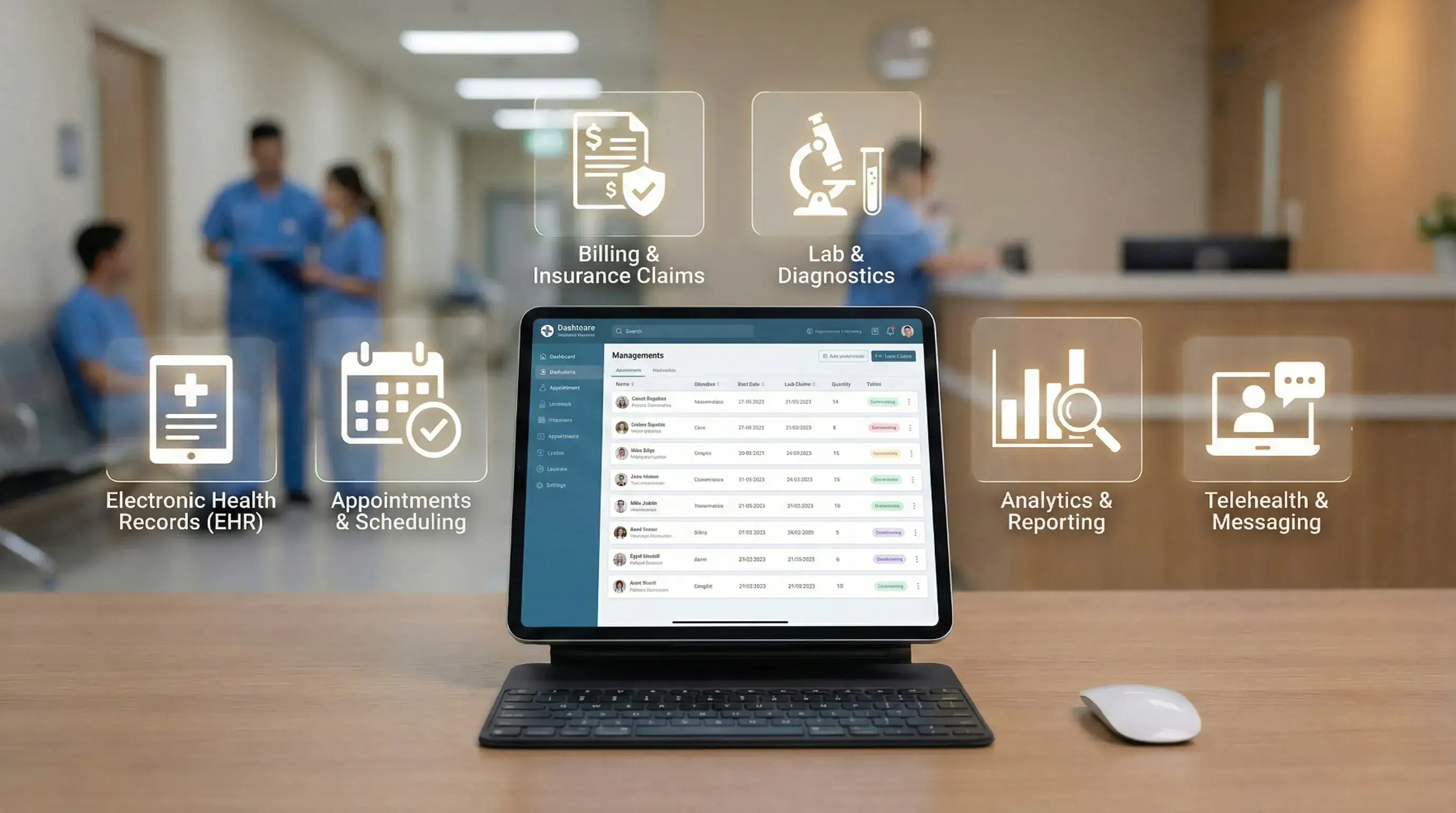
A hospital management system provider builds software that connects every part of hospital operations. Their platform integrates lab systems, radiology imaging, pharmacy management, billing, and patient records into a unified interface that staff access from various devices throughout the hospital.
The company serves over 40 hospitals, ranging from small community facilities to large regional medical centers. Their system processes millions of transactions monthly: lab orders, prescription fulfillments, patient admissions, discharge summaries, and insurance claims.
The team had built a reliable system. Their uptime numbers were solid, and hospitals trusted them with mission-critical workflows. But their testing approach hadn't evolved with their product complexity.
Testing In-House Led to Limited Device Coverage
The QA team followed a methodical process, but they were limited by the number of physical devices they had in the office: two laptops, one iPad, and one Android tablet. They ran through test scripts checking that forms loaded, data saved correctly, and integrations responded as expected.
Integration testing happened during off-peak hours, typically between 11 PM and 4 AM, to avoid disrupting live hospital operations. QA engineers would stay late or work weekends to test HL7 message flows, FHIR API responses, and database synchronization across test environments that mirrored production.
The process took 12 days per release cycle. Three days for core application testing, four days for lab integration testing, three days for radiology integration testing, and two days for pharmacy and billing validation. Everything sequential, everything manual, everything on those same 4 devices.

"We were thorough within our constraints. But those constraints were significant. We couldn't test during business hours because we needed access to test environments that mimicked production, and those environments were actively being used for demos and training. We couldn't test on more devices because we didn't have the budget to buy every phone and tablet model hospitals actually used."
— QA Team Lead
When a Major Release Exposed the Test Coverage Gaps
The company rolled out a significant update: a new mobile-responsive interface for their medication administration module. The redesign would allow nurses to verify medications, document administration, and check for drug interactions directly from tablets on medication carts.
The QA team tested extensively on their 4 devices over two weeks. Everything worked. Forms loaded quickly, buttons responded correctly, and barcode scanning functioned properly. They released to production.
But within a day, the IT team was flooded with support tickets. Nurses reported the interface was unusable on their iPad Mini devices since buttons overlapped, forms were cut off, and critical drug interaction warnings weren't visible. Doctors using older iPhones couldn't access patient summaries because the interface assumed larger screens.
The problems varied by device, by OS version, by screen resolution, and by browser. The QA team couldn't reproduce most issues because they didn't have those device combinations.
"That release was a wake-up call. We had 40+ hospitals calling with device-specific issues, and we couldn't replicate a single one in our test environment. We realized our 4-device testing approach was completely inadequate for the reality of how hospital staff actually used our software."
— VP of Product Engineering
Finding a Testing Infrastructure That Matched Reality
After a thorough root-cause analysis, the IT team identified that infrastructure limitations were leading to unexpected errors like these. They needed a solution that could test on real devices staff actually used, run integration tests in parallel without waiting for off-hours access, and scale as they added more hospital integrations.
They considered several testing approaches. The problem was, buying physical devices would cost tens of thousands of dollars and still wouldn't cover the full range of hardware in the field. Device emulators missed the rendering issues that only appeared on real hardware. They needed actual devices with real browsers, real screen sizes, and real performance characteristics.
LambdaTest's Real Device Cloud offered exactly that: access to 10,000+ real devices instantly, without capital expenditure or device maintenance overhead.
Wider Test Coverage With Real Device Cloud
Our team connected LambdaTest to their testing infrastructure and immediately had access to thousands of device combinations that matched their hospital staff usage patterns.
"I remember the first time we tested our medication administration module on an iPad Mini in LambdaTest, we immediately saw the button overlap issue that nurses had reported. We'd tested on a standard iPad and assumed it would work on the Mini. Fortunately, having access to the real devices revealed problems we would never have caught with our old approach."
— VP of Product Engineering
LambdaTest's Real Device Cloud eliminated guesswork. When a hospital reported an issue on a specific device, the QA team could pull up that exact model and OS version within minutes, reproduce the problem, and verify the fix on the same configuration before releasing a patch.
HyperExecute Sped Up Integration Testing by Over 80%
The bigger bottleneck was integration testing. The company's HMS platform connected to lab systems via, radiology systems, pharmacy systems, and billing systems. HyperExecute ran all integration tests in parallel during normal business hours using isolated test environments which saved us a lot of time. What previously took 12 days of night-time testing, completed in 3 days.
"HyperExecute gave us back 9 days per release cycle. We could test thoroughly without waiting for off-hours access. We could validate integrations in parallel without worrying about test environment conflicts. It complete upgraded our release velocity."
— VP of Product Engineering
The test intelligence dashboards showed exactly where integration failures occurred, which systems responded slowly, and which test scenarios consistently passed or failed. The team could prioritize fixes based on actual impact rather than guessing which issues mattered most.
92% Fewer Interruptions to Hospital Operations During Testing
One of the biggest constraints in healthcare testing is the fear of disrupting live operations. Hospitals operate 24/7, and any testing that impacts production systems could affect patient care.
LambdaTest's infrastructure allowed the team to create comprehensive test scenarios that ran against staging environments without touching production, all in parallel, without affecting live hospital operations.
"Before LambdaTest, we tested conservatively because we were always worried about disrupting production. Now we test aggressively because we have isolated, scalable infrastructure. We can throw 100 concurrent users at our staging environment to see how the system handles night shift volume without worrying about impacting actual hospitals."
— VP of Product Engineering
Key Impact Metrics
- Integration testing time reduced from 12 days to 3 days (75% reduction)
- Device coverage expanded from 4 devices to 10,000+ real device combinations
- Production incidents decreased by 92%
- Release frequency increased from monthly to bi-weekly
- Support tickets for "interface not working" decreased by 73%
- Hospital staff satisfaction scores improved from 3.1 to 4.4 (out of 5)
- Zero critical defects in last 6 releases
Looking Forward
The company continues expanding their testing infrastructure to match their product roadmap. They're integrating visual regression testing to catch UI inconsistencies across device types before releases and performance testing to ensure
They're also exploring LambdaTest's accessibility testing capabilities to ensure their HMS interface works for hospital staff with disabilities. As healthcare regulations increasingly emphasize digital accessibility, having built-in testing for screen reader compatibility, keyboard navigation, and color contrast compliance becomes essential. The team sees this as both a compliance requirement and a quality improvement building software that genuinely works for everyone who needs to use it.
Transform your healthcare testing from reactive firefighting to proactive quality assurance. Book a demo with LambdaTest to see how real device testing, parallel execution, and scalable infrastructure can help you ship healthcare software with confidence without disrupting the hospitals that depend on your system.
Industry
Hospital Management Systems
Location
United States
LambdaTest Products used

More related customer stories


Start your journey with LambdaTest
Get 100 minutes of automation test minutes FREE!!